
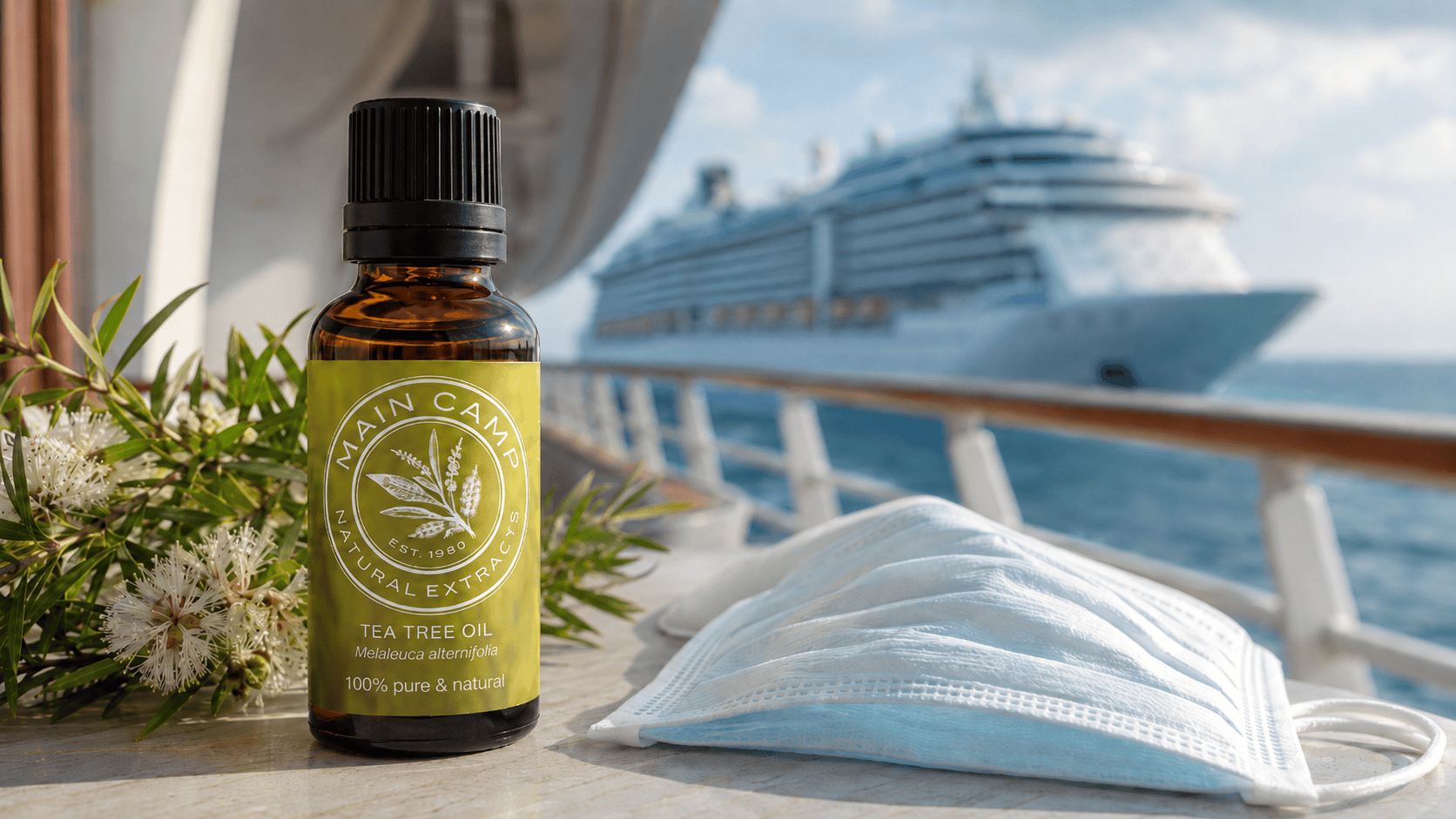
The recent attention around hantavirus is another reminder that infectious disease risk is not disappearing. COVID-19 showed how quickly a virus can disrupt global health, supply chains, workplaces and consumer behaviour. The next pandemic is not a question of if, but when — and preparedness will increasingly depend on practical tools that help reduce microbial risk in homes, workplaces, healthcare settings, transport, agriculture and public spaces.
Tea Tree Oil, produced from Melaleuca alternifolia, is already well known for its broad antimicrobial properties. Today, growing research into its antiviral and surface sanitising potential is opening new opportunities for product manufacturers looking for natural, plant-based ingredients with functional value.
What is Hantavirus?
Hantaviruses are a group of viruses mainly carried by rodents. Human exposure can occur when contaminated rodent urine, droppings or nesting materials are disturbed, allowing infectious particles to become airborne. Public health authorities recommend avoiding sweeping or vacuuming rodent-contaminated areas and instead using appropriate disinfectants before cleaning.
Hantavirus is not the same as COVID-19, influenza or other respiratory viruses, but it highlights a broader issue: viruses can emerge from animal reservoirs, spread through environmental exposure, and create serious health risks when prevention and hygiene measures are inadequate.
Importantly, hantaviruses are enveloped viruses. Historical CDC guidance notes that hantaviruses have lipid envelopes and are susceptible to many disinfectants, including diluted hypochlorite solutions, detergents, 70% ethyl alcohol and many general-purpose household disinfectants.
This does not mean Tea Tree Oil has been proven to kill hantavirus specifically. However, it does support the broader principle that enveloped viruses can be vulnerable to agents that disrupt the viral envelope — an area where Tea Tree Oil research is increasingly relevant.
Tea Tree Oil and Antiviral Research
Tea Tree Oil has long been recognised for its antibacterial and antifungal properties, but its antiviral potential is now receiving more attention.
AgriFutures Australia reported on research led by Dr Padraig Strappe and a team at Curtin University investigating the antiviral activity of Tea Tree Oil against respiratory viruses and contaminated surfaces. The project focused on measuring and validating antiviral activity, including virucidal effects, using recognised testing methodology.
Main Camp has previously covered this research in “The Power of Tea Tree Oil: A Natural Defender Against Respiratory Viruses”, which explains that Tea Tree Oil may help disrupt the viral envelope, potentially neutralising the virus before it can infect host cells.
Earlier scientific studies also support the relevance of Tea Tree Oil in antiviral research. Garozzo et al., in “Activity of Melaleuca alternifolia oil on Influenza virus A/PR/8: study on the mechanism of action”, reported activity against influenza virus in vitro. Pyankov et al., in “Inactivation of Airborne Influenza Virus by Tea Tree and Eucalyptus Oils”, investigated the potential of Tea Tree Oil and Eucalyptus Oil against airborne influenza virus. These studies were referenced in Main Camp’s earlier COVID-19 article.
Why This Matters for Natural Sanitising Products
The commercial opportunity is not to claim that Tea Tree Oil is a cure or a standalone protection against hantavirus. It is to recognise the growing demand for natural sanitising ingredients that can support hygiene-focused products when properly formulated, tested and used in the right application.
COVID-19 permanently changed consumer awareness around hand hygiene, surface cleaning, air quality and microbial risk. Hantavirus is another reminder that infectious disease prevention is not only about hospitals and vaccines; it is also about everyday hygiene, environmental cleaning, high-touch surfaces, workplaces, transport, animal facilities and public spaces.
This creates opportunities for Tea Tree Oil in:
• Natural surface cleaning products
• Hygiene sprays and cleaning formulations
• Air-care and environmental hygiene products
• Veterinary and animal facility cleaning products
• Workplace and public-space hygiene solutions
• Natural disinfectant and sanitising product development
Tea Tree Oil’s natural origin, strong antimicrobial profile and growing body of antiviral research make it highly relevant for manufacturers developing next-generation hygiene products.
Pandemic Preparedness: A Long-Term Market Trend
The world is likely to face more infectious disease events in the future. Population growth, global travel, urbanisation, climate change, and increasing contact between humans, animals and the environment are all contributing to a higher risk of emerging infectious diseases.
This is why pandemic preparedness is becoming a long-term priority for governments, businesses and consumers. The market is moving beyond emergency purchasing and toward more permanent hygiene habits: better cleaning protocols, safer shared spaces, improved environmental hygiene and products that combine efficacy with consumer-friendly positioning.
Natural ingredients will play a growing role in this shift. Consumers want products that are effective, but they are also increasingly interested in ingredients that are plant-based, traceable and sustainably produced.
Tea Tree Oil sits at the intersection of these trends.
Main Camp Natural Extracts: Reliable Australian Tea Tree Oil Supply
Main Camp Natural Extracts is the world’s largest producer of Tea Tree Oil, with large-scale farming and production operations on Australia’s east coast. We supply premium Australian Tea Tree Oil to global manufacturers looking for quality, consistency, traceability and reliable commercial-scale supply.
For brands developing natural sanitising products, surface cleaners, hygiene sprays or antimicrobial formulations, raw material quality matters. Consistent Tea Tree Oil composition, including terpinen-4-ol content, supports reliable formulation performance and product integrity.
Main Camp Natural Extracts offers:
• Premium Australian Tea Tree Oil
• Full batch traceability from plantation to finished product
• Reliable commercial-scale supply
• Consistent terpinen-4-ol profiles
• Sustainable Australian farming and production practices
• Experience supplying essential oils to global manufacturers
As concern grows around emerging viruses, environmental hygiene and pandemic preparedness, Tea Tree Oil is well positioned as a natural ingredient for the next generation of sanitising and hygiene products.
